Back in September 2023, sport horse breeder Kimmy Risser proposed a U.S. Hunter Jumper Association rule change that would allow mules to compete in hunter and equitation divisions. Though the USHJA approved the rule that December, the U.S. Equestrian Federation did not, first tabling and eventually voting against the proposal a year later. As a result, long-eared equines remain excluded from hunter competitions.
But in late 2025, Risser and eventer Holly Fox, owner of Fox Farms in Woodland, California, resurrected that rule change proposal, again requesting access for mules in the hunter ring. USHJA approved the proposal at its December annual meeting, and now it goes back to USEF to be reconsidered and voted on again in June.
Expanding the mule rule is only logical, argue mule lovers including Risser and Fox: Mules have been allowed to compete in dressage for more than 20 years and were welcomed—after a two-year effort—into the jumper ring in 2022.
Interestingly, neither Risser nor Fox own nor compete mules. But they have friends who do: Risser’s friend Whitney Barnard owns Alan A Day’s Work, the jumping mule who became a Breyer model in the summer of 2024.
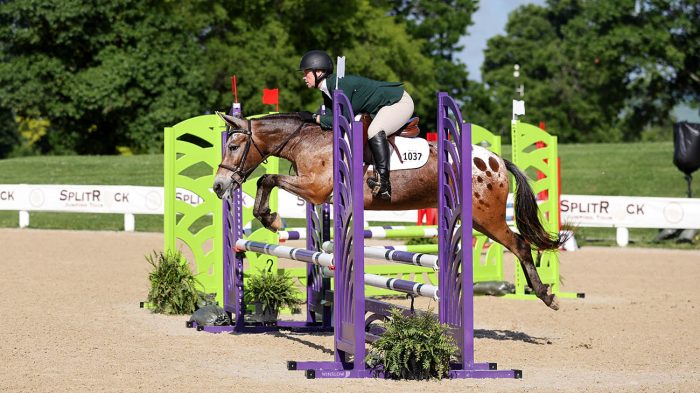
And Fox became friends with lifelong mule aficionado Amy McLean at the University of California, Davis, where McLean is a professor in the Department of Animal Science and Fox is the equestrian center coordinator. McLean, who grew up on a mule and donkey farm in Georgia and earned her Ph.D. in Mali, West Africa, through Michigan State University in donkey nutrition, training, and management, has conducted mule and donkey research in over 40 countries.She eventually began riding with Fox’s assistant trainer, and the three since have attended shows together.
The foundation of the proposal, for both Risser and Fox, is simple: There’s just no reason mules can’t compete against horses. Hunter classes have clear standards, and mules can be held to those same standards and judged equally alongside their horse competitors.
And, on a more personal level, Risser and Fox just want to be able to enjoy additional equestrian events with their friends.
Both Barnard and McLean have been turned away from competitions at various levels due to their partners’ long ears, as so many venues—from schooling shows to rated competitions—abide by USEF rules.
“Mule owners are humble people,” McLean said. “If you own a mule, you have to be. Most of us attending horse shows with our mules are not trying to beat six- or seven-figure horses. We just love our animals, we set personal goals, we want to improve our own skills, and we want to get out and show the world what mules can do.”
ADVERTISEMENT
The hunter ring, McLean explained, may also be better suited to many mules’ temperaments and personalities. She currently competes her own Greystone’s Silhouette—whose breeding includes Belgian Warmblood, Quarter Horse and Andalusian donkey—in local jumper shows. But although she says “Sarge” is athletic and loves to jump, she suspects he’d favor the hunters.
“Mules, Sarge included, are generally on the slower side, which is a disadvantage in the jumper arena,” she said. “And I much prefer to go slow and pretty!”
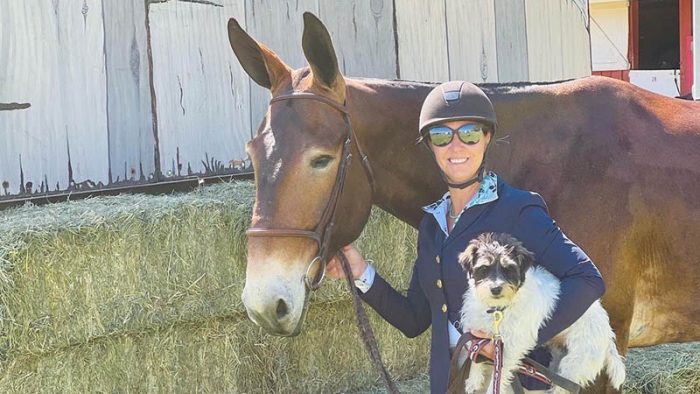
The expansion of competitive avenues for mules would, according to both McLean and Barnard, be nothing but beneficial to the equine industry as a whole.
“[Mules and donkeys are] a growing population,” McLean said. “But mule-specific shows are getting smaller. Some states don’t have any. So let’s broaden the opportunities and get mules to more shows.”
Additionally, mule supporters argue, other breeds with breed-specific shows, such as Quarter Horses and Arabians, are still welcome to participate in hunter shows. They’re not excluded because they already have their own breed organizations. So why should mules be limited, and what effect might that exclusion have on the industry as a whole?
“I don’t know if people realize it, but this rule has a trickle-down effect that really has the greatest impact on local levels of showing,” said Barnard. “It limits grassroots riders. And it financially impacts show organizers; people bring their mules to do the jumpers but can’t show in the hunters. Passing this rule would result in more engagement and more income for local show organizers as well as larger organizations, which we know is vital to the industry.”
When “Alan” was allowed to compete in jumper classes, for example, Barnard upgraded her USHJA membership, became a member of USEF, recorded Alan in both organizations, and then took Alan to their first rated horse show, excited to now be allowed to compete. There’s no other way to view it, she said, besides industry growth.
“Now, the fact that we can show in jumpers but not hunters just seems so silly,” she continued. “I can warm up with your hunters, stable next to your hunters, longe next to your hunters, graze next to your hunters—but we can’t compete in the ring together. It just isn’t logical.”
McLean agreed that the expansion of competitions for mules would be a financial benefit across the industry.
“I ride with a trainer,” she said. “So if I could also compete in hunter classes, I’d attend more shows, which would mean more money in her pocket as well. It’s a win-win.”
ADVERTISEMENT
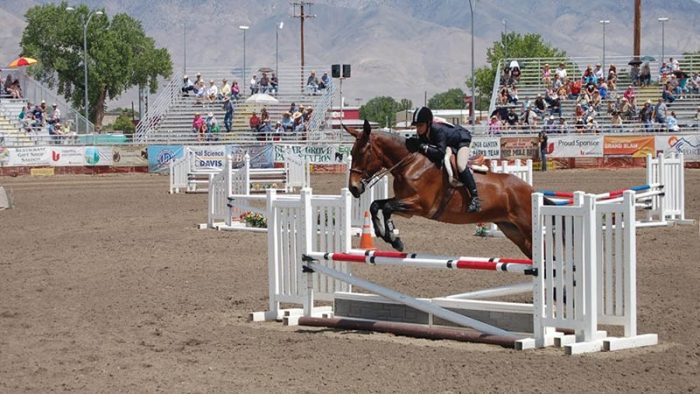
Supporters of this proposal are optimistic that 2026 will be the year the rule is passed. An educational social media campaign in 2023 and 2024 brought awareness and empathy to the plight of mule owners who want more opportunities to show. And mule aficionados, McLean included, have been raising awareness and advocating for mules throughout the industry over the past few years by writing letters to organization leaders and speaking at various equine events.
Last June, McLean gave a talk at the American Horse Council’s annual conference titled “Donkeys and Mules Are Equine, Too.”
“Top folks from USEF, USHJA and USEA were there, and I received a lot of positive feedback,” she said.
So when might we expect to share the hunter ring with some adorable long-eared equines?
Mule supporters like Barnard and McLean hope the answer is 2027.
The proposal will be considered by various USEF committees this spring, and USEF members will be allowed to comment on all rule change proposals. (In 2024, the majority of member comments were in favor of passing the rule.)
In May, a few overseeing USEF councils will consider the committee and membership responses and make a recommendation to the USEF board. USEF will then review and vote on the proposal at its mid-year board meeting in June.
If the rule passes, mules could begin competing in hunter divisions at any competition following USEF rules in 2027.
“It’s notable that two different affiliates on four different occasions—twice at USHJA and twice at [the U.S. Eventing Association]—approved this rule, but it was voted down at the USEF level, despite so much positive member feedback,” Barnard said. “The FEI allows mules in their rulebooks. I really hope this is the year we see USEF do the same.”
“I don’t know what stereotypes we’re up against,” McLean said. “That mules bray instead of whinny, maybe, or that people believe mules are not as well-trained. I don’t know. I just wish people would be more open, and let judges judge as they see fit, according to the same standards that horses are held to.”
“Mule people are grassroots,” Fox added. “They’re just trying to have a good time with their animals, who are completely qualified to participate in the sport. It’s absolutely within their wheelhouse of what they can do, and what they enjoy doing.”