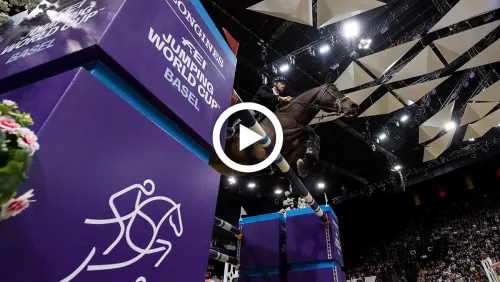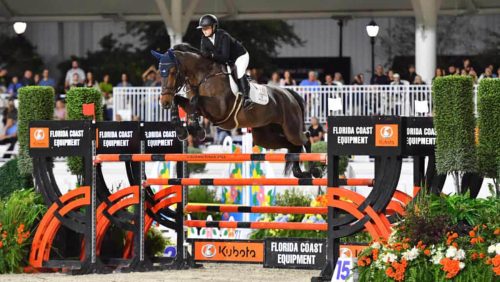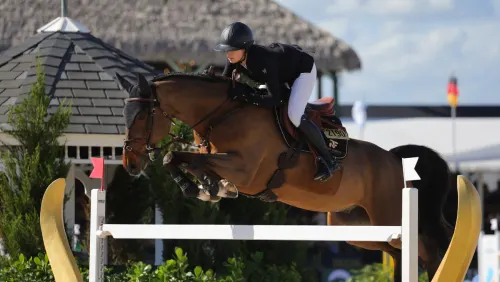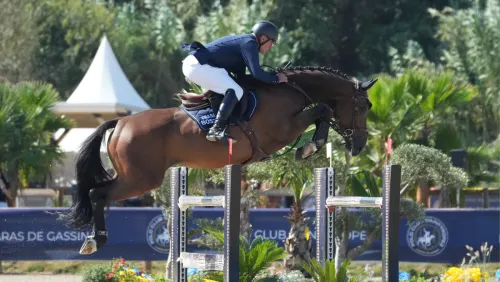
As Laura Kraut enters her next decade—she turns 60 today—she’s still riding at the very top of her game, which happens to be the top of everyone’s game. October was a particularly big month for Kraut, who rang out the last weeks of her 50s by cracking the top 10 of the Longines FEI World Rankings and winning the $340,000 FEI Jumping World Cup Washington CSI5*-W on Tres Bien Z.
After decades in the saddle, few things shake the five-time Olympian’s confidence on horseback. Lions, she admits, are one of them.
“We’ve been to Africa, I don’t know, 10 or 11 times now, because we love it; It’s just my favorite thing,” said Kraut, who returned to South Africa in November to celebrate her milestone birthday with friends and her partner, British show jumping legend Nick Skelton.
“I did [a safari horseback ride] once,” she continued, laughing. “I wouldn’t do it again. The one time is good! What you actually learn is that [the guides] have no control. You feel like they do until they don’t. But we came out of it unscathed, so I’m not going to risk it!”
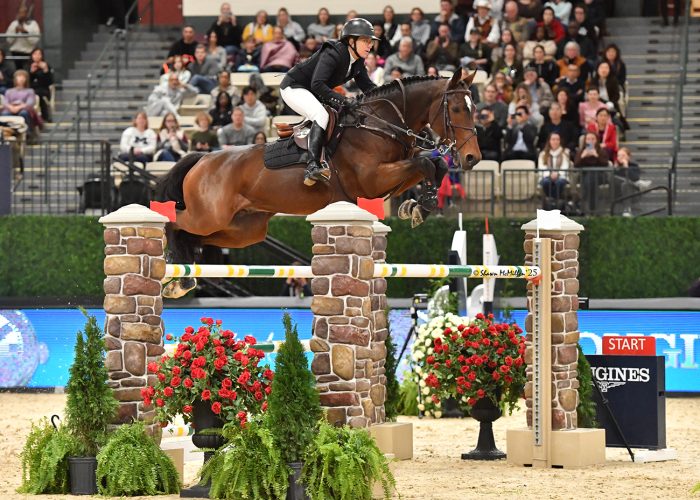
When she’s not avoiding lions on safari, Kraut has found a rhythm that balances the demands of top sport with quieter joys of life at 60.
A transatlantic commuter, she carves out time for the things that recharge her: a cozy week at her farm in the English countryside with Skelton, sightseeing vacations with equestrian friends, and visits with her two young grandchildren in California (they’re currently more into tractors than horses). When it comes to riding, she’s learning what it means to stay at the top as the faces around her change and the entire sport evolves. And Kraut’s finding that now, she has the unique advantage of experience that can be tallied in decades.
“I feel like in this sport, the equalizer is that experience is knowledge; and obviously youth is bravery and athleticism,” Kraut said. “But I feel like [experience] balances the scales a little bit.”
For Kraut, that experience has been hard-won. Kraut grew up riding with her sister Mary Elizabeth Kent in Florida, where their mother got the girls into ponies early. Kraut started on the local show circuits as a teenager and then young professional, building her mileage the old-fashioned way. She would often show up to competitions with just her saddle, sometimes catch-riding dozens of horses in a single day. That hunger and resourcefulness would power her to the top levels of international show jumping, famously making her first Olympic team—as an alternate for Barcelona in 1992—on the quirky off-track Thoroughbred Simba Run.
‘A True Definition Of Grit’
Her longtime teammate and competitor, McLain Ward, praises Kraut as a rider whose devotion to developing her knowledge and ability helped her climb to the top. There were no shortcuts for her, he said.
“We hear a lot in the sport now: Well, if you don’t come from a wealthy background, you can’t make it,” Ward said. “And this is a first-class example of that that’s not true. This is a person who came up catch-riding from the grassroots of the sport and has gotten to the very top, and should be an example in every way of how to do that.”
The two riders’ careers have run parallel and intersected as they’ve spent decades competing, then teaming together on U.S. championship squads from Nations Cups to Olympic Games, securing team gold at the 2008 Olympic Games in Beijing and team silver in 2021 (Tokyo) and 2024 (Paris)—both of the latter with Baloutinue. In Tokyo, Kraut, then 55, became the oldest female Olympian to win a medal since 1904. Then in Paris, she broke her own record, becoming the oldest U.S. Olympic medalist in 72 years.
ADVERTISEMENT
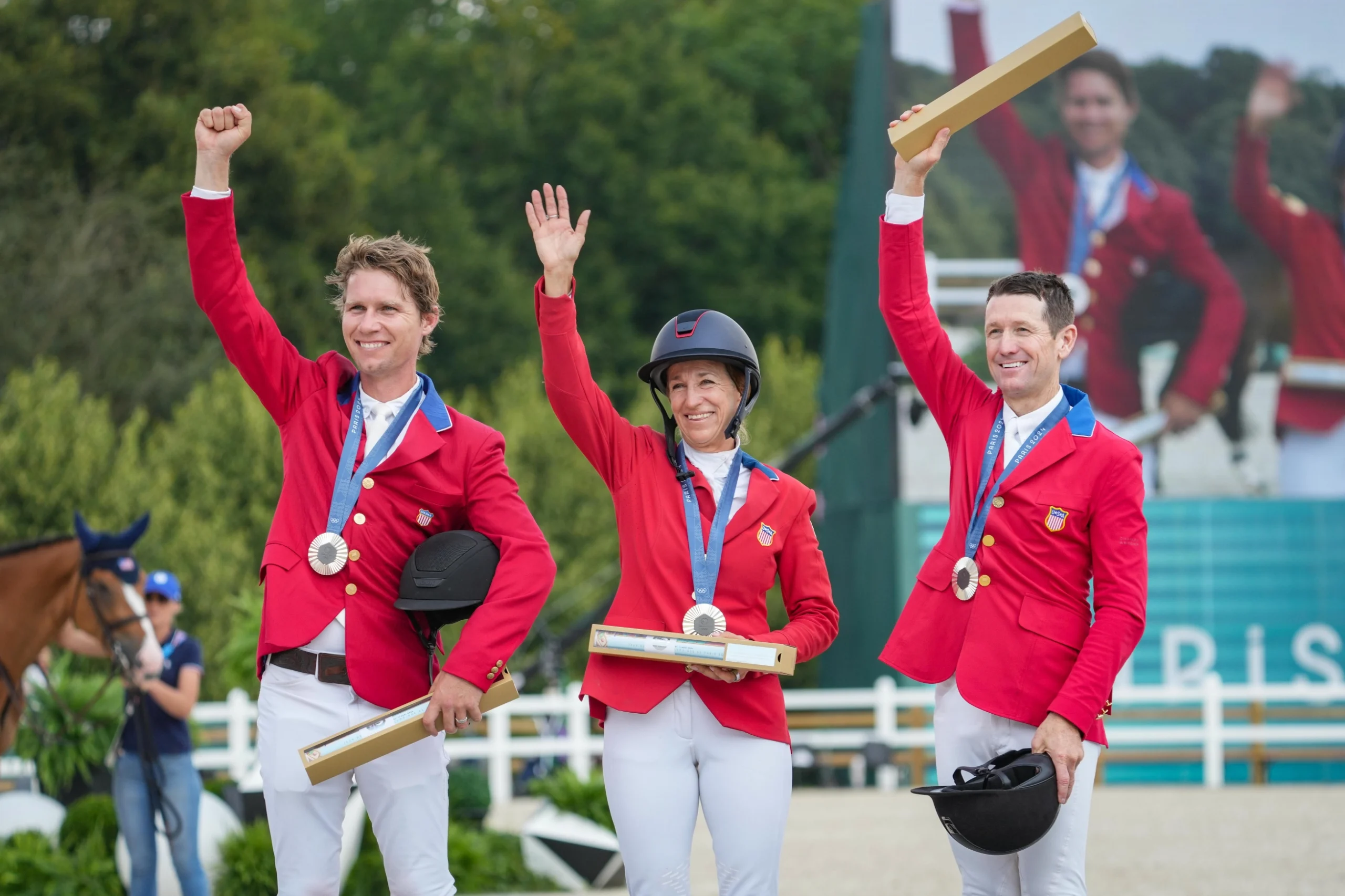
Ward sees the qualities that made Kraut a scrappy kid rider as the same traits that account for her lasting success.
“I think Laura’s a true definition of grit and determination and fighting spirit, and I think that’s helped her persevere from her early beginnings as a catch rider and pony catch rider to the top of the international sport,” he said. “She’s truly an incredibly resilient, gritty competitor.”
Last year, Kraut found that a previously undiagnosed concussion was leading to vision problems that had impacted her ability to find distances. She first partnered with Tres Bien Z (Toulon—Hermione De La Pomme, Nabab De Reve) amid those issues, and so their connection was slow to progress until she got the proper treatment and corrective glasses. Since then, she and “Tres” have found their distances just fine, finishing double-clear in the BMO Nations Cup CSIO5* at Spruce Meadows (Alberta) in September and helping the U.S. team to a third-placed finish. The pair was on the winning team in the Nations Cup CSIO4* in Florida in February and on the fourth-place Nations Cup team in Dublin in August.
“I know she was quite frustrated and thinking that maybe retirement was in the view,” Ward said of Kraut’s vision issues. “It’s just a testament to her fighting spirit, the way she’s come back and probably had the year of her career. I walk away thinking: something to aspire to.”
Top-10 Ranking ‘Sort Of A Surprise’
Kraut admits that she doesn’t pay much attention to the rankings, and edging toward the show jumping top 10 this fall wasn’t on her radar until suddenly, she was making headlines as the first woman since 2021 to make the feat.
“I don’t normally even consider my world ranking other than, I like to try to stay sort of in the top 30 to 50 in order to get into the good shows over here in Europe,” she said. “But I don’t ever really worry too much about what my actual ranking is once I’m past that. So this was sort of a surprise, actually, because I normally don’t even look.”
Kraut says the key to her continued success is driven by the same constant that’s underpinned her entire career: the quality of her horses and her partnerships with them.
“So much is down to the horses that you have,” she said. “No matter what—if you’re 20 or if you’re 60—it’s all a matter of the horses you’re riding.
“It helps when you have numbers, that you have enough so that one horse doesn’t have to work so hard,” she added, describing her grand prix string. “So I think that with ‘Balou’ and [Bisquetta] and Tres Bien [Z] and Dorado [212] and now Una Mariposa—so then they aren’t always having to perform every week, and so then that helps to keep them sound and keep them going.”
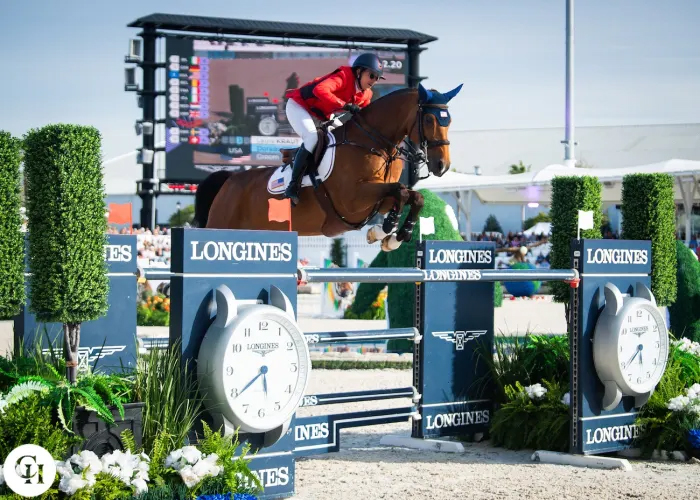
While it’s not new for Kraut to prioritize keeping quality horses in her barn, what she considers to be quality has evolved.
“I would say, probably my tolerance level might have changed,” she said. “You know, I think obviously when you’re younger, you’re willing to maybe deal with a horse that has some behavioral issues, or a more challenging horse. As you get older, you prefer one that maybe is more trustworthy, or maybe a little less strong. But I will say that I still wouldn’t turn away a very special horse even if it had a rideability issue or something. I think I’m still competitive enough that I would rather work with that than not do it.”
ADVERTISEMENT
Bisquetta is one such special horse—an animal with incredible talent that makes up for a few quirks. What Kraut gives “Biscuit” in patience the mare returns in try. Kraut’s partnership with the mare has delivered some of her biggest results of her already winning season, including topping the $580,000 Rolex Grand Prix of Dublin, where they were the only pair to earn a clear round, and the Nations Cup of Rome. The pair also placed second in the $750,000 Rolex U.S. Equestrian Open Grand Prix CSI5* (Florida) and third in the Longines League of Nations St. Tropez CSIO5* Grand Prix.
“I’ve had people come to me and say, ‘I was thinking of quitting and because you’re still going, I’m going to continue,’ which is really nice to hear. And I guess it’s good if I’m setting some record!”
Laura Kraut
“She can be incredibly quirky, more than any horse I think I’ve ever had,” Kraut said. “She’s afraid of other horses, particularly their tails. She doesn’t like them swishing.”
To accommodate Biscuit’s reactivity and horse-shy nature, Kraut relies on building trust between her and Biscuit. She said that the team has tried “a lot of different things,” but in the end, patience goes furthest in settling the mare’s nerves. And luckily for Kraut, the two of them share a happy place: Once Biscuit is in the show ring, she knows the mare will focus all her fire into jumping clear.
“She’s amazing in the ring. I mean, that is her happiest place—because there are no tails in the ring!” she said with a laugh. “So she’s very happy the minute I go into the ring. I think she’s relieved, because it’s just her. She just tries so hard and is not afraid of anything, and she’s just really an incredible athlete.”
In those deeply present moments of a jump-off, where horse tails don’t exist, and thoughts of the world rankings fall away, it’s easy for Kraut to feel like not much has changed. It’s just about her and her horse. And if others take inspiration from what happens with Kraut and her horses, all the better.
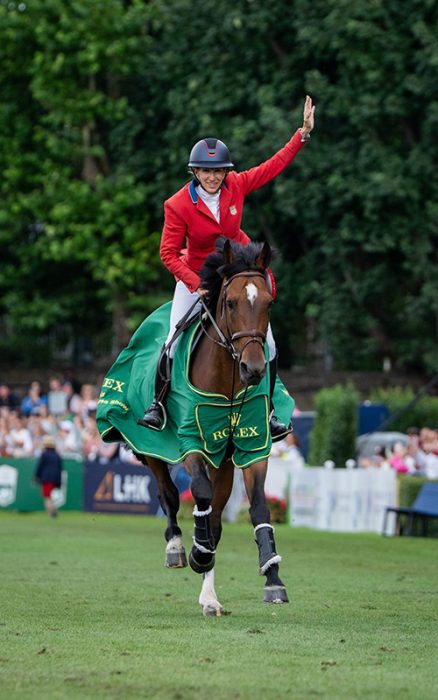
‘I’m Very Happy If It Inspires People’
“Listen, there’s no denying that I’ve gotten older,” she said. “If it gives inspiration to people who are maybe considering that they’re too old to achieve anything, or, you know, they’ve waited too long—I think the beauty of this sport is that as long as you’re feeling fit and healthy, you can continue.
“I’m very happy if it inspires people,” she added. “I’ve had people come to me and say, ‘I was thinking of quitting and because you’re still going, I’m going to continue,’ which is really nice to hear. And I guess it’s good if I’m setting some record!”
That enduring joy, and the sense that even after decades at the top, she’s still happiest simply being around horses, is what those who know Kraut say defines her best.
“I think she starts out as just having a genuine love for the horses,” Ward said. “I mean, she was a horse kid from the beginning, and I think she still is—you know, just a few years later.”