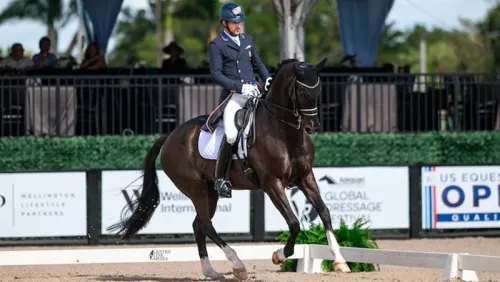
I just returned from a week serving as a chef d’equipe at the FEI North American Youth Championships in Michigan. This is one of my favorite events of the year. Why? Well, when I’m not trudging back and forth between the barn and the dressage complex at Traverse City (which I swear is uphill both ways), or explaining to the kids for the 57th time why they cannot go on a trail ride, or coaxing a terrified parent out from behind a tent flap so they can actually see their child compete—I get to talk. A lot.
Throughout the week, I spoke with dozens of kids and their parents about how they got started and what helped them reach this level. Because, let’s be honest, it’s rare for a young dressage rider to make it this far. As we chatted, a truth became very clear: Finding dressage isn’t easy for kids in this country. In fact, it’s downright discouraging at times.
Which brings me back to a question I’ve seen debated again and again: Where are all the dressage kids?
The Real Reason Dressage Isn’t Kid-Friendly
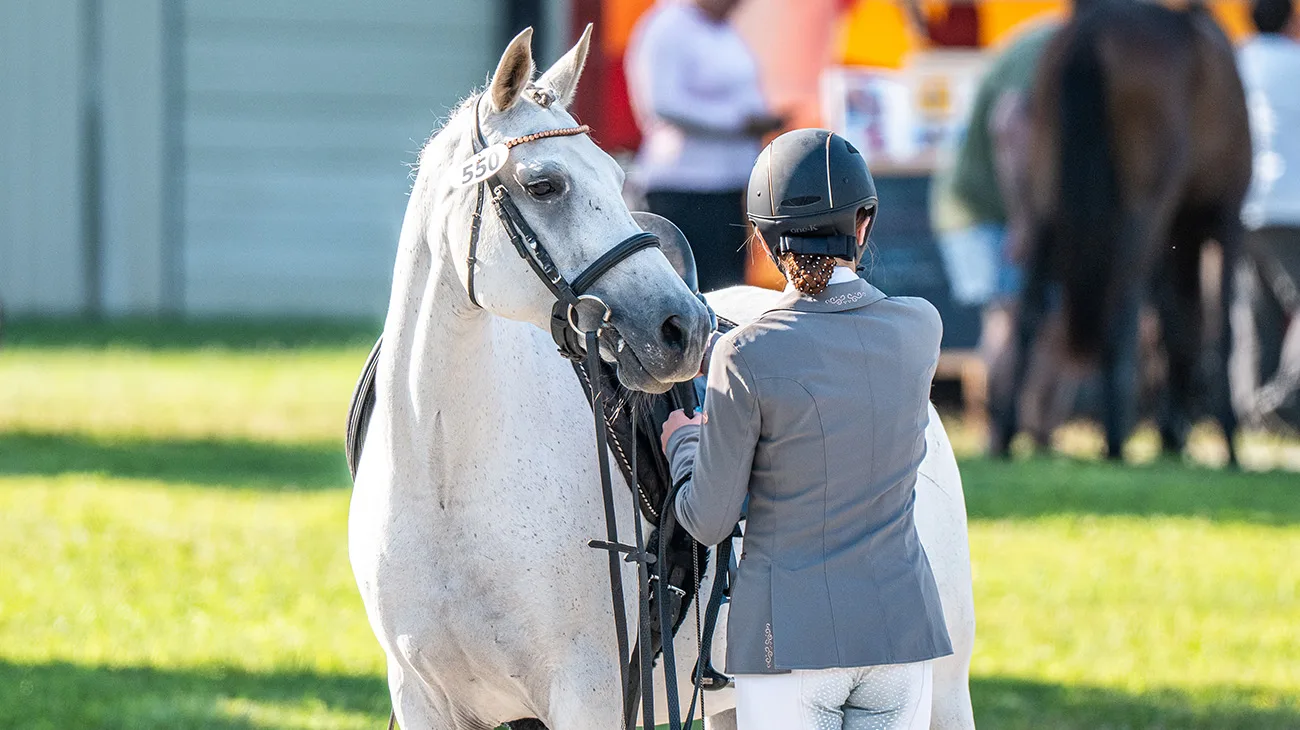
Let me paint you a picture. You are a non-horsey parent with a 6-year-old girl that loves horses. You type “horseback riding lessons near me” into a search engine and start investigating. Ninety percent of the programs that show up offer instruction in “hunt seat equitation.” Must be popular. You see that the highest-rated barn offers a summer camp, and you decide to send your child. She loves it and starts making friends with the kids who ride at the barn. She begs for weekly riding lessons, and after a while, her trainer mentions that she is really getting quite good. She should start to compete.
She does the leadline division and gets exposed to an environment like the Devon Horse Show (Pennsylvania). Dreams ablaze in her heart, she asks if she can have a pony of her own, but your family isn’t ready for that type of commitment. “No worries,” says the trainer. “You can lease our small pony.” Then she ages out, and you lease the medium pony or the large pony or the junior hunter.
But at some point you realize it’s time to take the plunge, and your trainer helps you buy a competitive A-circuit equitation horse. Your daughter goes on to place well at several big championships, catching the attention of a noted trainer who offers to take her on as a rider. She goes on to become an assistant trainer or to cruise happily around the amateur divisions. The end.
Now, let’s say your first call was to a dressage barn. Nine times out of 10, that conversation is going to go like this:
“Hello, I’m inquiring about riding lessons for my 6-year-old daughter.”
“Hi! Does she have her own horse?”
“No, we don’t.”
“Sorry, can’t help you.”
But maybe by some miracle you call one of the 10% of dressage barns that can accommodate beginner children.
Your kid takes riding lessons there for two years. In her third year she might do some dressage schooling shows at introductory level. Your trainer may even take her to some unrated hunter/jumper shows because the format is easier, cheaper, and she can get more ring time. Next year, your kid begs to show recognized at training level. At only 10 years old, she really does quite well on the barn’s lesson pony. She qualifies for the Great American/USDF Regional Dressage Championships.
When you arrive in the warm-up for your first class, you see your child’s eyes widen to saucers. She rides over to her trainer and asks in hushed tones, “Is she in my class?” Yes, my dear, she is. Your eyes slide over to the 21-year-old rising professional riding her client’s young horse, who appears to be the second coming of Glamourdale.
The class commences. Your kid rides her heart out on her lesson pony (you had tried to find something nice for her to lease for this year but no luck finding a seasoned dressage pony for lease). Still, even with her best test of the year, she places third-to-last with a 62%. The young pro wins with a 73%. It’s not because your kid isn’t great and skilled for her age, but because there is a chasm in terms of experience and physical ability between a 10-year-old and a 21-year-old.
“We need to cultivate a system that engages kids and families—and then supports them in reaching their goals.”
This is what it is going to look like for the next few years until you buck up and buy a pony for her to do the FEI children’s or pony classes, probably from Europe because it’s the easiest place to find a competitive pony that’s actually been proven with a kid.
Sure, you could aim at Dressage Seat Equitation Medal Finals, which has a 13 and under division—if you have one of the few 10-year-olds in the country who can ride first level inside out and backwards, and you can find a size-appropriate mount for her to do it on.
Getting To The Root Of The Problem
In general, we do not provide the Disney experience to families like other equestrian disciplines do. We do not structure our divisions to give kids appropriate milestones. For example, why not have an equitation class that is just walk/trot? Why can’t we get out of our own way and reward correct basics without making the kids do leg-yield zigzags and counter-canter and three changes of lead through trot on the diagonal?
Because the way our youth divisions are structured is so challenging, no trainer really wants to structure their business around it. It’s a bad gamble that will almost assuredly result in a ticked off parent and a disappointed kid. Much easier to help adult amateurs who already know they want to keep all four feet on the ground pursue their USDF medals.
We want to see more kids riding dressage. We want to see better horsemanship and depth at every level of the sport.
ADVERTISEMENT
So here are my counter-questions: Where is the space for younger riders to compete, learn and connect with their peers? Where are the milestones for them to aim towards?
Until we have an outlet for these young kids to showcase their skills and test their ability in classes that are structured fairly, I think we are going to continue scratching our heads and wondering, where are all the dressage kids?
10 Way To Build A Better Pipeline
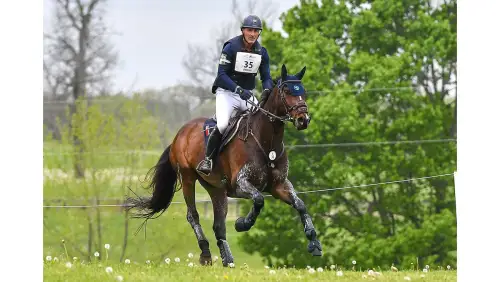
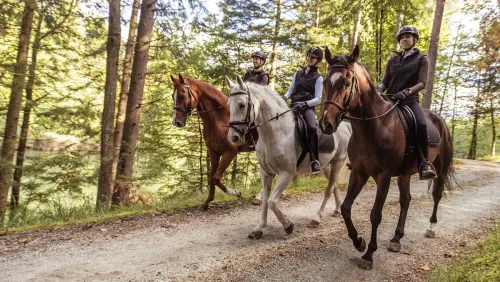
So where are these kids? They’re out eventing. They’re going to USEF Pony Finals (Kentucky). They’re doing Interscholastic Equestrian Association and 4-H. They’re doing junior rodeo. They’re showing horses in American Quarter Horse Association competitions. And unless we change the way youth dressage is structured, that’s where they’ll stay.
But we don’t have to sit here wringing our hands, and we also don’t have to reinvent the wheel. Every organization listed above is doing something right because they have very active youth programs that have tapped into the multitudes of horse-crazy kids in America. We have to stop operating from a mindset of scarcity. Right now there are hundreds of kids out there itching to ride a musical freestyle to Taylor Swift—they just don’t know it yet.
“Right now there are hundreds of kids out there itching to ride a musical freestyle to Taylor Swift—they just don’t know it yet.”
So, with that in mind, here are 10 things we can do to make space for those kids in dressage.
1. Age-Appropriate Divisions At Lower Levels
We need to restructure youth classes at second level and below. How about:
- 12 and under
- 13 to 16
- 17 to 21
This simple change would make classes more equitable and developmentally appropriate, offering kids a fair chance to shine.
2. Redesign Dressage Seat Equitation
Break it into:
- Walk-trot equitation (intro level)
- Walk-trot-canter equitation (training level)
- Dressage Seat Medal (first level and up)
We do not need to make an 8-year-old ride counter-canter to prove they’re learning correctly. Let’s reward proper basics at an early age and give them a pathway to build from there.
3. Bring On The Ponies
Borrowing from hunter and European dressage models, let’s create three separate pony divisions:
- Small pony (12.2 hands and under): training level, riders 12 and under
- Medium pony (over 12.2 hands to 13.2 hands): first level, riders 14 and under
- Large pony (over 13.2 hands and under 14.2 hands): second level, riders 16 and under
Pony divisions create age-appropriate pathways and help breeders and trainers create markets for dressage ponies.
4. Revive The USDF Regional Youth Team Challenge
This used to be a thing, and now, I think we have only three similar competitions in the whole country. Imagine a team competition for younger, grassroots dressage riders to showcase their skills and test their ability in classes that are structured fairly by age and experience. It offers a jumping off point that gives kids the confidence to reach for bigger and bigger goals.
5. Appoint Regional Youth Advisors
Each USDF region needs a youth development advisor to:
- Identify talent early
- Work with the national youth coach to mentor kids and their trainers
- Work with show managers and event organizers to develop more opportunities for kids
ADVERTISEMENT
Why? The United States is 27 times the size of Germany. One national coach can’t cover it all. We need a boots-on-the-ground approach to outreach and mentorship.
6. Support Youth Trainers
In a survey I conducted, the No. 1 thing youth-oriented lesson barns asked for was mentorship.
Trainers said things like, “I want to be better for my kids, but I feel isolated and overwhelmed.” Create a mentorship program just for youth dressage instructors. Help them learn, grow and thrive.
7. Offer A Badge Through The USDF Instructor Certification Program
Some of the best, most passionate, most effective, most innovative teachers I know will never ride down centerline at the FEI level. We need a way to identify them, mentor them, and recognize their unique skillset. They are out there right now doing God’s work, teaching our future USDF president to post and dying quietly inside as our next Olympic medalist does her whole training level canter tour on the wrong lead. It is a hard, often thankless job, which they do as a labor of love, and they are so darn important.
8. Rebuild The USDF Youth Executive Board
Please don’t take this the wrong way, but I volunteer for a lot of dressage organizations, and boy, are we all looking old. Our sport needs young leaders. A youth executive board gives teens experience in governance, communication and project management—and ensures we’re building a sport that speaks to the next generation. Because some of us are already tired and would like to retire someday.
9. Revamp The USDF FEI Youth, Youth Outreach And
USEF Developing Clinics I’ve participated in these clinics as both an athlete and a trainer, and I always leave a little frustrated. To me, it seems sort of silly to expend resources sending our coaches around the country to teach these clinics, only to deny them the time to gather information from the riders and their teams.
I get it, we like to be efficient. We put everyone in one room and try to listen and educate all at once. But I don’t think that is in-depth enough. We have some of the best young and developing riders in the country as a captive audience—many times we even have their trainers and parents. We should add another day to these clinics so we can sit down for 30 minutes with each team, review their goals, and ask some questions. For example:
- What is keeping you from achieving your goals?
- What do you think you are really good at? What are you struggling with?
- Looking to the future, what excites you? What worries you?
- What is instrumental to your success? What can you not live without?
- How can we help you?
Imagine how much we would learn. We have to create feedback loops. It will be pivotal to our ability to identify and solve problems quickly. And I fear we don’t have a lot of time.
10. Encourage Horsemanship
As a sport, we tend to get very caught up in teaching the intricacies of dressage. It’s a complex art that takes a long time to learn, so I get it. But our educational programming and awards should also emphasize basic horse management skills. Some things to consider: awards for youth who have the best turnout at a show, youth challenges that combine riding with sport horse handling, horse bowls at prominent dressage shows, horsemanship skill assessment sheets to be completed by all riders applying for FEI Youth or Youth Outreach Clinics, and unmounted weekend horsemanship seminars.
Final Thoughts
In case you missed it, our numbers in dressage are declining rapidly at every level. The lack of depth in our U.S. program is scary. There are many reasons for this, but one of the most stated is the social barrier to entry. In short, we are unwelcoming, unforgiving and, at times, downright cruel to newcomers.
We need to cultivate a system that engages kids and families—and then supports them in reaching their goals. We need to make dressage feel like an exciting, accessible journey instead of an uphill climb with no map.
I don’t think the kids are missing. They’re just out there waiting for us to make room.
Nicole DelGiorno is a USDF gold medalist as well as a bronze and silver medalist with distinction. She’s also an ‘L’ program graduate with distinction, four-time FEI North American Youth Championships medalist, and board member of The Dressage Foundation and Dressage at Devon (Pennsylvania). Her passion for horses began at an early age, and her commitment to their proper care and handling was fostered by the U.S. Pony Clubs, where she earned her B rating in dressage. Today she specializes in developing youth riders to the elite levels of the sport as the head instructor at The Dressage Academy in Cream Ridge, New Jersey. Her students include USDF bronze and silver medalists, USEF dressage program clinic participants, as well as Festival of Champions competitors and NAYC medalists.
In The Forum, people are invited to express their views and offer constructive criticism on any topic relevant to working with and enjoying horses. The opinions expressed by the writers are entirely their own and not necessarily those of The Chronicle of the Horse.
This article originally appeared in the September 2025 issue of The Chronicle of the Horse. You can subscribe and get online access to a digital version and then enjoy a year of The Chronicle of the Horse. If you’re just following COTH online, you’re missing so much great unique content. Each print issue of the Chronicle is full of in-depth competition news, fascinating features, probing looks at issues within the sports of hunter/jumper, eventing and dressage, and stunning photography.