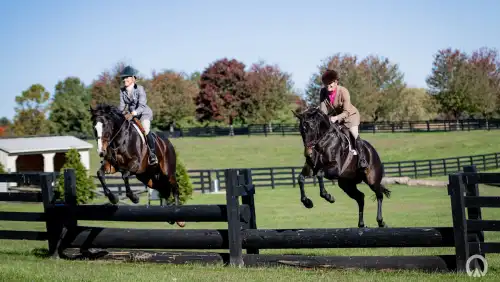
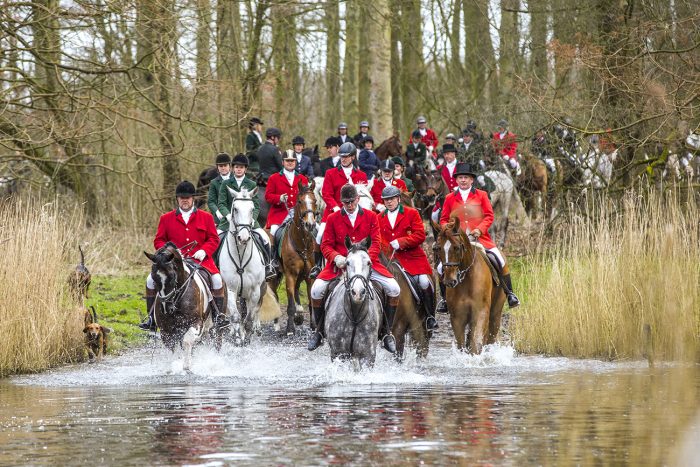
You’re hunting abroad, and everything feels familiar yet different: the sharp sound of a horn slicing through morning mist, horses stamping with restless energy as riders gather in their finest, the soft gleam of leather and the crisp rustle of tweed. Ahead, a chessboard of fields and hedgerows, each gallop a daring move, each jump a thrilling plunge into the unknown. You’re not just riding; you’re immersed in a centuries-old tradition, far from home, where landscapes, cultures and history converge with every stride.
But then … [record scratch].
Wait—did I pack extra gloves? Are my biceps any match for the hireling who pulls like a freight train? Does my coat fit the dress code, or am I about to commit a sartorial sin that’ll have the master side-eyeing me all day? Are we really jumping that ditch?
Suddenly, you’re spiraling into a mental checklist the length of a hunt whip, wondering how anyone manages to pull off this kind of adventure without losing their minds (or their stirrups).
Hunting abroad is the trip of a lifetime. But the fantasy comes with its complexities. Every hunt, every country, every culture has its own rules and rituals, and planning such a trip is a labyrinth of logistics. So where do you begin?
With the right knowledge, resources and a bit of planning, that dream of hunting abroad can become your reality.
The DIY Hunting Abroad Experience
Before you picture yourself thundering across a field of frostbitten four-leaf clovers, let’s rewind to the elemental first step: finding a hunt.
If you’ve got international hunting connections, great—maybe they can point you in the right direction. If not, don’t despair. The internet is a treasure trove for aspiring globe-trotting foxhunters. Start with “Baily’s Hunting Directory” (the “red-backed bible of hunting” since 1897), browse social media for hunts of interest, and reach out to hunt secretaries.
Some hunts are famously welcoming, rolling out the red carpet for guests with special events and hearty hospitality. Others are more exclusive, or even exclusionary—you might fork over your capping fee only to be left for dead in a mud puddle when your hireling decides to bugger off. Still other hunts are so discreet you might never even know they exist.
Virginia-based foxhunting couple Rosemarie (“Rosie”) and Grosvenor Merle-Smith began riding to hounds in 1983 and never looked back, spending decades pursuing the sport throughout the U.S. and beyond. Together, they’ve traveled the globe from England, Ireland and France to Mongolia and Australia, fueled by a wanderlust and a passion for the chase. For all its romance, Rosie is quick to point out that huntingabroad, particularly if you’re planning the trip yourself, requires preparation—and a bit of grit.
Depending on where you go, hunting is not for the faint of heart—or the less-than-sticky seat. “You better be a darn good rider in England and Ireland,” she said. “The horses are strong. It’s run-and-jump. If you love being in a mini steeplechase, great, but that also raises your risk of getting hurt. Be honest with your riding skills because it’s going to be longer and harder than you think.”
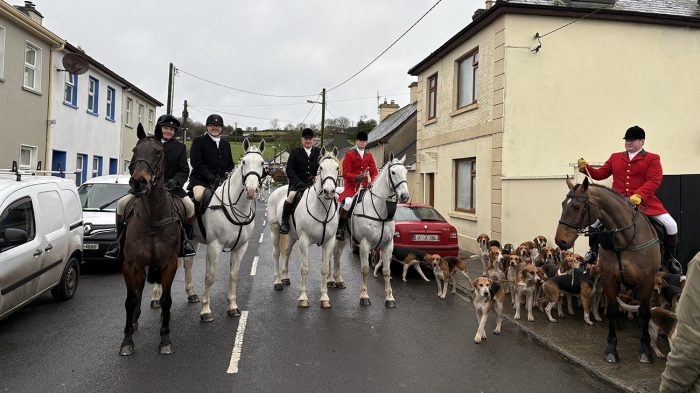
Every hunt has its own personality, quirks and speed.
“It’s like here: You have packs that are basically a social trail ride, and everyone loves it. Then there are packs where you’re flying through the woods, and it’s dangerous. You have to know what kind of rider you are and decide what you want,” Rosie said.
Hunting abroad is as much about adapting to the differences as it is about enjoying the similarities. Learn and be
respectful of traditions. Know insurance requirements. Do some extra push-ups before you go. Make a contingency plan for if things go sideways. The very best thing you can do, Rosie said, is observe—perhaps even following the hunt in a vehicle in advance to scope out the terrain, pace and culture.
Rosie is candid about the things they don’t tell you in lawyer’s office paintings. Like how hunt saboteurs in England might show up by the jeepful to, as she puts it, “make your day unpleasant.” The glare you’re liable to receive if you accidentally flub some etiquette. Or the misery of sopping wet leather boots when you should have worn rubber. And it’s true that hunting abroad comes with costs; capping fees, hirelings and other expenses add up quickly, in addition to the usual travel costs.
But for those willing to do the work, the payoff is an adventure you’ll never forget. You can’t expect to grasp the nuances of another country’s hunting traditions in a single weekend, but if you do your homework, find the right fit, and set realistic expectations, you’ll have an experience that’s absolutely worth it.
The Concierge Hunting Abroad Experience
If the thought of coordinating it all yourself has you clutching your stock tie in panic, a concierge hunting experience might be your saving grace. Enter Adrienne Rubin, founder of Equescapes Equestrian Adventures, who makes foxhunting holidays in Ireland, England, France and South Africa feel effortless. Her company takes care of the logistics, so you can focus on enjoying the ride.
“We start with figuring out where people want to go,” Rubin said. “Even if they’re just saying, ‘I want to foxhunt in Ireland,’ or, ‘I’ve always wanted to hunt in France,’ we help them identify the best options for their riding level and timeline.”
ADVERTISEMENT
To Rosie’s earlier point—that discovering you’re in over your head can be a day- or even trip-ruiner—Rubin’s expertise is invaluable. Her team knows the personality of every hunt they recommend, having experienced them firsthand.
“We try to steer people toward hunts that will suit their riding level,” Rubin explained. “For example, the hunt we work with in South Africa has options specifically tailored to newer riders. It’s a much slower hunt compared to some that are known for being really hard, fast rides. Making sure people are riding at an appropriate level for the activity they want to do, and setting them up with the right horses and a guide who can cater to that level, is key.”
A critical aspect of Rubin’s service is preparing clients for the cultural and ethical nuances of their chosen destination. Foxes aren’t the only quarry; depending on where you are, you might find yourself hunting stag, wild boar, hare, or even nothing at all.
“It’s important to know whether the hunt is a live hunt or a drag hunt,” Rubin said. In France, nearly every hunt is live, and they’ll go until
they get something. England’s trail hunting, on the other hand, is more manufactured. Ireland is a mix of both. “So if you’re very anti-killing animals in any way, shape or form, then going somewhere that’s doing a live hunt is not going to be for you,” she said. “And if you are a big hunter, you probably aren’t going to fully enjoy a drag hunt.”
Traditions and etiquette also play a starring role, and they vary widely by region. “There are some things they all have in common, like basic riding etiquette,” Rubin said, “but different hunts have funny little traditions.” In France, for instance, you can’t mount or dismount until the master does, and in South Africa, no one dares remove their coat until the master sheds theirs first.
Speaking of attire, know before you go. “You don’t want to show up with a borrowed coat that has colors or buttons you haven’t earned,” Rubin warned. “Some hunts won’t even let you wear your own colors.” Honoring these customs, Rubin emphasizes, is part of the experience.
Rubin’s itineraries include more than just booking a day of hunting. “We often recommend spending a few days getting to know the horse you’ll be riding. That gives clients time to get comfortable with their mount and the hosts, which really sets them up for a better experience on the hunt day,” she said.
The experience of riding an unfamiliar horse can surprise even seasoned riders.
“A lot of people are very advanced riders on their horse at home under the supervision of their trainer, but riding somewhere else on an unfamiliar horse can be really tricky,” Rubin said.
Getting to know your horse isn’t just a nicety; it’s a safeguard.
“We encourage people to keep an open mind,” she said. “If your host says you shouldn’t be riding in the first field or jumping, you need to trust their judgment.”
“If your host says you shouldn’t be riding in the first field or jumping, you need to trust their judgment.”
Adrienne Rubin
Hunts often take place in rural pockets of the world, adding to the charm but requiring careful planning. Rubin suggests building in extra time to acclimate and explore. “Spend enough time there that you feel prepared for the hunt—being able to ride those horses ahead of time, getting to know your hosts, understanding the local hunt traditions and etiquette and history—but at the same time giving yourself enough time to do some other things,” she said.
And, since most hunting trips leave riders with plenty of free time, there’s room to embrace the local flavor—whether that means indulging your inner history buff, exploring the countryside, or asking for directions to the nearest pub.
Tradition And Thinking ‘Outside The Fox’
Hunting on horseback has always been about more than just the ride. It’s a shared history that stretches across continents and centuries.
The truth is, people have been chasing prey on horseback for just about as long as they’ve been riding horses.
Take the ancient Middle East, for example: over 2,600 years ago, stone carvings show kings galloping after lions (talk about pressure to keep up). Iranian royalty took it a step further in the fourth century AD, setting up game parks where hunters on horseback stalked leopards, wild boars and other deadly animals. Across the Atlantic, Native American tribes embraced horses after European settlers introduced them, using them to hunt buffalo with extraordinary precision.
What we tend to think of as foxhunting, with its origin story of English noblemen chasing foxes off farmland, is just one of many hunting-on-horseback themes. But that variation became widespread and lives on today.
Foxhunting doesn’t get much more quintessentially “classic” than in Ireland, where established outfitters share the experience with guests from around the world.
ADVERTISEMENT
If Flowerhill Equestrian Centre in County Galway looks like a scene from a period drama, with its ivy-draped stone buildings and pastoral charm, that’s because it has been. Tailored for everyone from novices to seasoned hunters, Flowerhill has 60 horses and ponies, a cross-country course and its very own private registered pack, the Flowerhill Hounds, kenneled on-site.
With your logistics sorted by recommended agents and close connections with local hunts like Grallagh Harriers Hunt Club, East Galway Hunt Club and The Galway Blazers, owner Oliver Walsh makes everyone feel at home. And his passion for the sport is infectious: “I believe it’s somehow built into our Irish genes—the sporadic gallop, and the thrill of the unorganized and the unexpected.”
The Dunraven in County Limerick is another popular destination for overhunting guests. Known as a go-to hub for foxhunters in the region, the hotel caters specifically to riders, with services like boot polishing and coat pressing. Owner Louis Murphy can arrange hirelings and connect guests to neighboring packs like the Limerick and Stonehall Harriers, ensuring every detail is covered.
The Dunraven works closely with Clonshire Equestrian Center, located nearby on 120 acres of rolling parkland. A sample itinerary includes hacks, jumping lessons, a kennel visit and a hunt with the County Limerick Foxhounds. Each day’s thrills end back at the hotel, where a roaring fire and a pint of Guinness await. “Clonshire and Dunraven offer a really nice holiday,” said Clonshire manager Sue Foley, “including a session at Clonshire to try out different horses and jump scary things and an Old World-style hotel.”
But not all horseback hunting involves the manicured field and tweed coats. Travel a little further afield—say, to Mongolia—and you’ll find a whole new way of thinking about the sport.
With Erik Cooper Adventures, you can gallop across the Altai Mountains with golden eagles instead of hounds. Yes, you read that right: eagles. It’s foxhunting, Mongolian-style, where you’ll work alongside Kazakh eagle hunters to chase prey through some of the world’s most dramatic landscapes.
“You’re not here to watch,” said Erik Cooper. “You’re here to be an active participant.” Guests are paired with their own eagle hunter and bird, learning the art of falconry and joining a team effort to flush out foxes, hares or even wolves (if they’re lucky enough to spot one). The hunt isn’t just about the thrill of the chase; it’s also steeped in ritual.
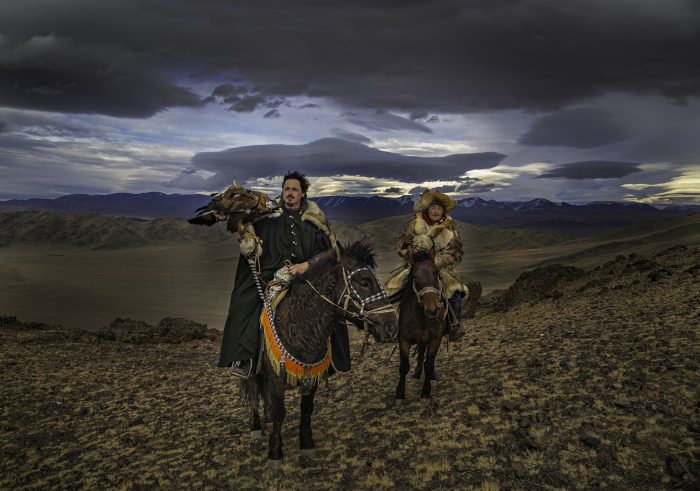
Mongolia, as Erik Cooper (left) demonstrates. Photo Courtesy Of Erik Cooper
“When a fox is caught, there’s a whole ceremony,” Cooper explained. “The hunter whose eagle made the final kill gets the fur, and pieces of the fox are offered to the other eagles that contributed.”
The experience trades polished tradition for something raw and immersive, though there’s still room for a bit of flair.
Cooper is known for kitting guests out in custom Game of Thrones-style capes, complete with Mongolian cashmere and wolf pelts. He points out that Western foxhunting is very much about the outfit, too. “But dressing properly for an adventure of this magnitude looks a bit different,” Cooper says. “You’re wearing a different kind of wool and checking into more of a fantasy mindset, a fantasy world. You’re galloping across ancient lands channeling your inner warrior.”
The experience is rugged but comfortable—you might be sleeping in a ger, but there are real beds, coal-burning stoves, and a chef who serves a mix of local and international cuisine.
“You’re out riding seven to eight hours a day, but everything else is bougie,” Cooper said with a laugh.
The Global Connection
For Equiventures’ Rubin, the magic of foxhunting abroad is as much about camaraderie as it is about the thrill of the chase.
“Foxhunting is kind of one big community around the world,” she said. “If you foxhunt in one place and then go somewhere else, you’re automatically already a part of that community. Even if you’re new to foxhunting, it’s such a warm and welcoming environment.”
It’s a scene that plays out time and again: A rider arrives feeling out of their depth—nervous about their skills and unsure about the etiquette—but they leave with so much more than just miles in the saddle, Rubin said.
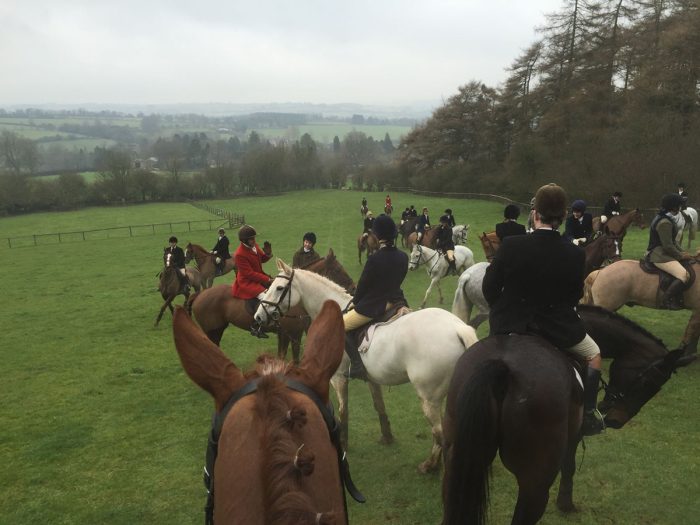
“Even if you show up, and you don’t know anybody, and you’re unsure of your riding, and maybe you haven’t hunted before, you end up making these wonderful friends and just leaving with these amazing memories—not just of the ride, but of the people that you spend it with, because it is such a community event.”
For other equestrian experiences, even on trail rides and treks, you’re riding single-file or spending such a long amount of time in the saddle that you stop talking to each other.
“Hunting is different,” Rubin explained. “The riding can be very serious, but it’s also a very social activity, and it really gives you a lot of opportunity to connect with riders, locals and whoever it is that you’re visiting.”
While many adventurers use foxhunting as a springboard to explore other activities—maybe guests foxhunt in South Africa, then head out on a horseback safari for a week—it’s often the hunt itself that steals the show.
“The feedback we get is often that the hunting is the best part of their trip. You don’t just check a box and move on,” Rubin said. “You leave with people inviting you to come back and visit or saying they want to come hunt with you at home. You leave feeling like you’ve truly been a part of the community.”